One of my favourite quotes I learned from my coach, Rich Litvin:
A goal is a place to come from, not to get to.
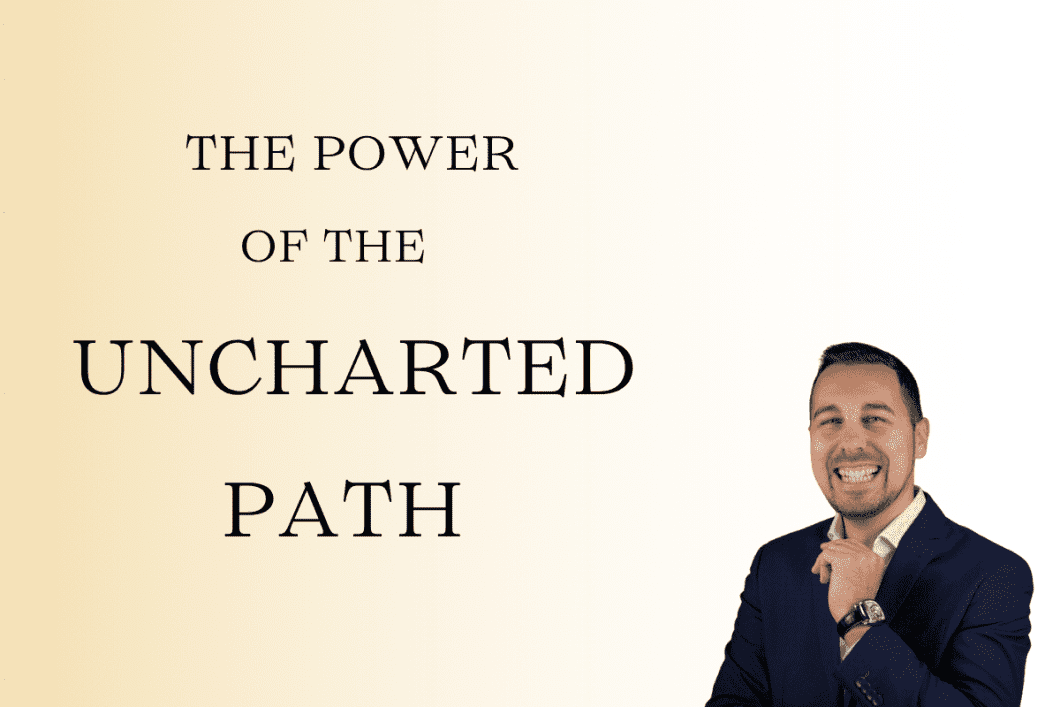
There’s something seductive about the known path.
It feels safe. Predictable. Measurable.
We know how to walk it.
But the truth is: the more familiar it is, the less likely it is to bring us forward.
A few weeks ago, I had a powerful coaching session with my Client who built several marketing empires.
We were exploring how she wanted to grow her business.
Her instinct was to leverage what she already knew — social media strategy, content marketing, visibility — areas where she’s an expert.
It made sense. She had proof it worked. It was clear, measurable, and within her zone of excellence.
But as we slowed down and dropped beneath the surface, something unexpected emerged.
She realized that the deeper truth — the part that lit her up — wasn’t about reach.
It was about relationship.
About building real community.
About creating something slower, more intentional, and ultimately more powerful.
It wasn’t the path she had in mind.
It wasn’t the one she could fully explain or predict.
But it was the one that felt alive.
That conversation gave me an insight I’ll carry with me:
Before I commit to a goal, I want to check multiple directions — not just the obvious one.
Because here’s what I’ve noticed — in myself, and in the people I coach:
The most attractive path is usually the one we already know.
It’s the one that feels efficient. Validated. Practical.
But if we only choose what’s familiar, we can only expect familiar results.
The uncharted path?
That’s the one that challenges us.
It asks something deeper.
It offers no guarantee — only a whisper of potential we haven’t yet lived.
At first, it shows us fewer opportunities. It feels vague, uncertain.
But once you start walking it, something incredible happens:
It reveals possibilities you couldn’t have imagined until you said yes.
If you’ve read this far, maybe part of you is already standing at a crossroad.
So take a deep breath.
Give yourself space.
Grab a pen and paper.
Write down your answers.
Be bold. Be honest.
And explore these questions:
What’s the path I’m walking simply because it’s familiar?
If I wasn’t trying to be efficient or successful, what direction would I secretly love to explore?
What scares me most about stepping into the unknown — and what might that fear be protecting?
What’s one small step into the uncharted I could take this week?
There’s no right answer.
Only the one that opens something in you.
Because the map you’ve been given is useful — until it becomes a cage.
And the path that truly changes you is the one you haven’t walked yet.
Love,
Laszlo